
Rug Motifs and Meanings
In this article, we have shared the meanings of the rug motifs that you have bought for your home and whose design you like.
Since its existence, human beings need to tell about their feelings, life, values, ideas, daily life, past and dreams. The people of every region and every period transfer this to their art by using the resources they have. The canvas of the Anatolian people is the rugs from Çatalhöyük until this time, and what they describe is hidden in the motifs that touch these rugs. Here are some carpet rug motifs and their meanings:
SCORPIO MOTIF
Rug motifs in the form of a scorpion, one of the motifs embroidered for protection, symbolize the demonic spirit. This scorpion always lurks to kill. It represents unprovoked fighting and maliin. Anatolian people who use a part or pattern of whatever they fear to avoid it use the scorpion motif on carpets and rugs to protect themselves from harmful creatures.
FERTILITY MOTIF
Rug patterns, known as fertility motifs, can be evaluated in three groups. In the first group; fruits such as pomegranate, grapes, melons, watermelons, figs, mulberries and animals such as dragons, bulls, snakes, rams, butterflies, deer, fish are present and symbolize vast happiness. In the second group; there are leaves, flowers and tree motifs, and they symbolize fertility, good luck. In the third group; natural beings such as waters, rocks, mountains take place and the universe, movement, structure as well as rebirth, dead.
BUKAGI MOTIF
The Bukagı is the name of the chain that is attached to the horse's two front legs so that it does not go far from the grazing. Inspired by this chain, the rug patterns and meanings symbolize love, unity and the stability of the family. The tradition of linking rings with red ribbons when getting engaged also comes from the symbol of the bukagı.
DRAGON/WYVERN MOTIF
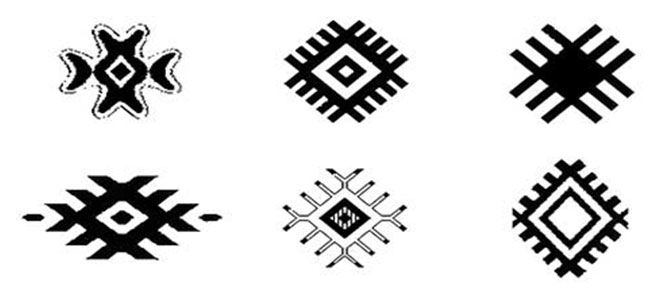
The dragon is a symbol of a giant species of snake with wings, its paws resembling a lion, its tail resembling a snake. He is the master of water and air and the keeper of hidden treasures. He touches carpets and rugs with the intention of getting the fertile spring rain.
ON HER HIP MOTIF
The widely used on her hip motif, femminism, fertility, fortune, joy, good luck, happiness and fertility. It is known that the first humans worshipped the mother goddesses as sacred, since they thought reproduction was a process belonging only to females, and the male did not know its contribution to reproduction. The origin of this motif, which continues to be used in carpet weaving today, is based on this belief about the mother goddesses.
EYE MOTIF
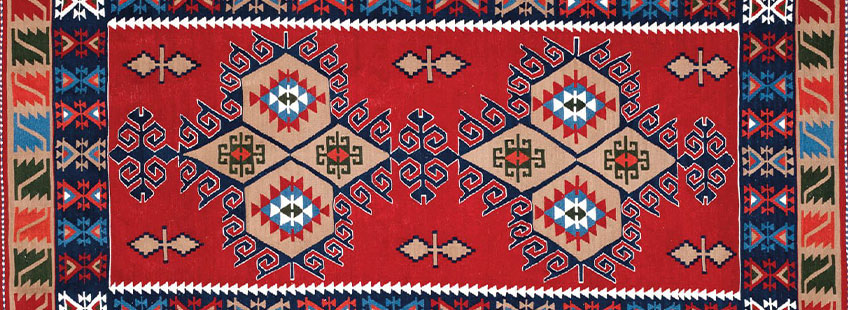
Eye-shaped rug patterns, which are processed as a precaution against the evil eye, are usually woven with the blue color that attracts attention. It is often used in rugs, in or around the on her hip, ram horn and fertility motif. In addition to being used for protection from bad eyes, it is a symbol of intellectual gaze, deep perception and spiritual enlightenment, such as the eye called the "heart eye" and the "third eye" on the forehead of Shiva, one of the Gods of Buddhism.